What is Garbage?
Garbage is the waste material that we throw away in our daily life.
Examples of Waste Materials
- Food waste (vegetable peels, leftovers)
- Paper and cardboard
- Plastic bags and bottles
- Glass, metal cans
- Wrappers and packaging material
What Happens to Garbage After We Throw It Away?
- Some waste breaks down naturally
- Some waste remains in the environment for a long time
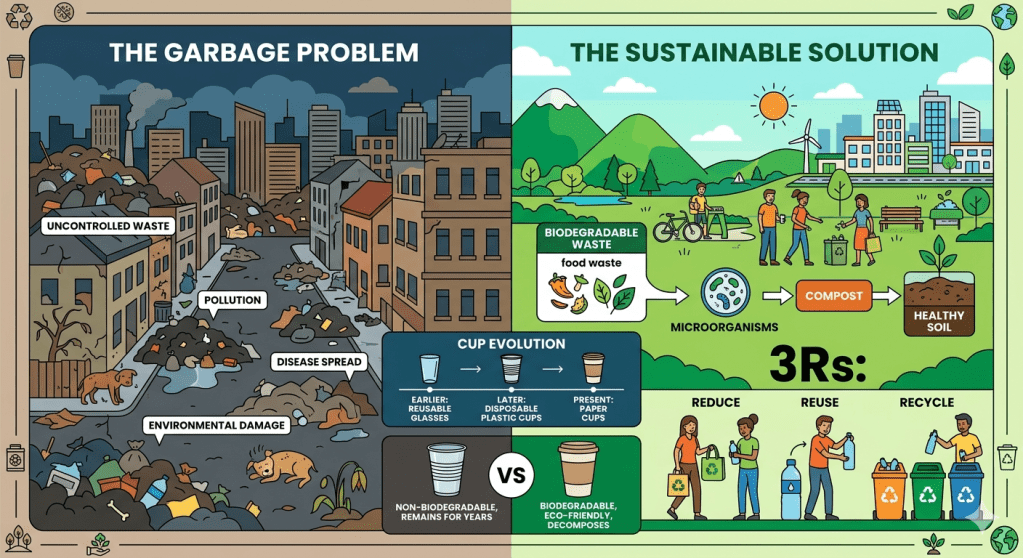
- Excess garbage causes:
- Pollution
- Bad smell
- Spread of diseases
- Harm to animals and plants
Why All Substances Do Not Break Down?
In our body, enzymes digest food.
- Each enzyme is specific
- One enzyme cannot digest all substances
Example:
Coal cannot be digested → no energy obtained
Similarly, bacteria and fungi in nature cannot break down many human-made materials like plastics.
Types of Waste
1. Biodegradable Waste
Substances that can be broken down by microorganisms (bacteria and fungi).
Examples:
- Food waste
- Paper
- Leaves
- Cotton
Biodegradable Waste
↓
Microorganisms
↓
Simple substances
↓
Mix with soil
2. Non-Biodegradable Waste
Substances that cannot be broken down by biological processes.
Examples:
- Plastic
- Glass
- Metal
- Polythene
These materials:
- Remain in the environment for years
- Harm animals and ecosystems
Garbage Problem in Cities
- Heaps of garbage in streets
- Littering in tourist places
- Increase in diseases
- Air, land, and water pollution
Why is Garbage Increasing?
- Improved lifestyle
- Increased use of disposable items
- Excessive packaging
- Use of non-biodegradable materials
Impact of Excess Garbage on Environment
More Waste
↓
Pollution
↓
Health Problems
↓
Damage to Ecosystem
Think It Over: Disposable Cups in Trains
Earlier
- Tea served in plastic glasses
- Glasses were returned and reused
Later
- Disposable plastic cups introduced
- Hygienic but caused huge waste
Alternative Tried
- Kulhads (clay cups)
- Required large amount of fertile topsoil
- Harmed soil resources
Present Solution
- Disposable paper cups
Advantages of Paper Cups Over Plastic Cups
| Paper Cups | Plastic Cups |
| Biodegradable | Non-biodegradable |
| Less harmful | Cause pollution |
| Can decompose | Remain for years |
| Eco-friendly | Harm animals |
Best Solution: 3Rs of Waste Management
REDUCE → REUSE → RECYCLE
- Reduce use of disposable items
- Reuse materials whenever possible
- Recycle paper, plastic, glass, and metal
Key Points to Remember
- Not all waste breaks down naturally
- Biodegradable waste is eco-friendly
- Non-biodegradable waste causes pollution
- Excessive use of disposable items harms nature
- Paper is better than plastic


Leave a Reply