What is an Ecosystem?
All living organisms like plants, animals, microorganisms, and human beings interact with each other and with their physical surroundings. This interaction helps maintain balance in nature.
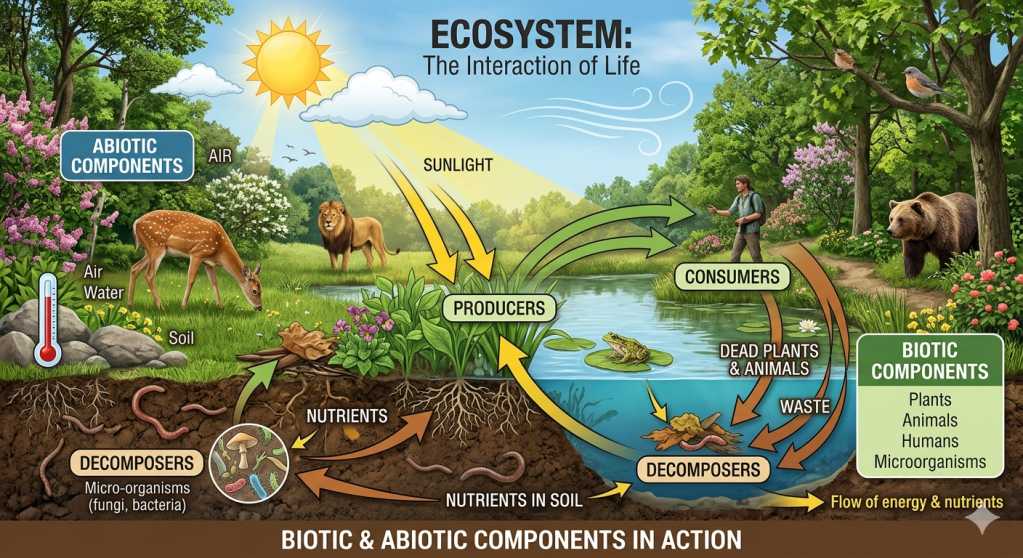
An ecosystem is formed when living (biotic) and non-living (abiotic) components interact with each other in a particular area.
Components of an Ecosystem
An ecosystem has two main components:
1. Biotic Components (Living)
These include:
- Plants
- Animals
- Human beings
- Microorganisms (bacteria and fungi)
2. Abiotic Components (Non-living)
These include:
- Air
- Water
- Soil
- Temperature
- Rainfall
- Wind
- Minerals
- Sunlight
Components of an Ecosystem
ECOSYSTEM
|
BIOTIC COMPONENTS
(Living things)
– Plants
– Animals –
– Humans
– Microorganisms
ABIOTIC COMPONENTS
(Non-living things)
– Air
– Water
– Soil
– Temperature
– Sunlight
Example of an Ecosystem
Garden as an Ecosystem
In a garden, we find:
- Plants: grass, trees, rose, jasmine, sunflower
- Animals: insects, birds, frogs
All these living organisms depend on abiotic factors like sunlight, water, air, and soil for growth and survival. So, a garden is an ecosystem.
Types of Ecosystems
- Natural ecosystems: forests, ponds, lakes
- Artificial (man-made) ecosystems: gardens, crop fields, aquariums
Types of Organisms in an Ecosystem
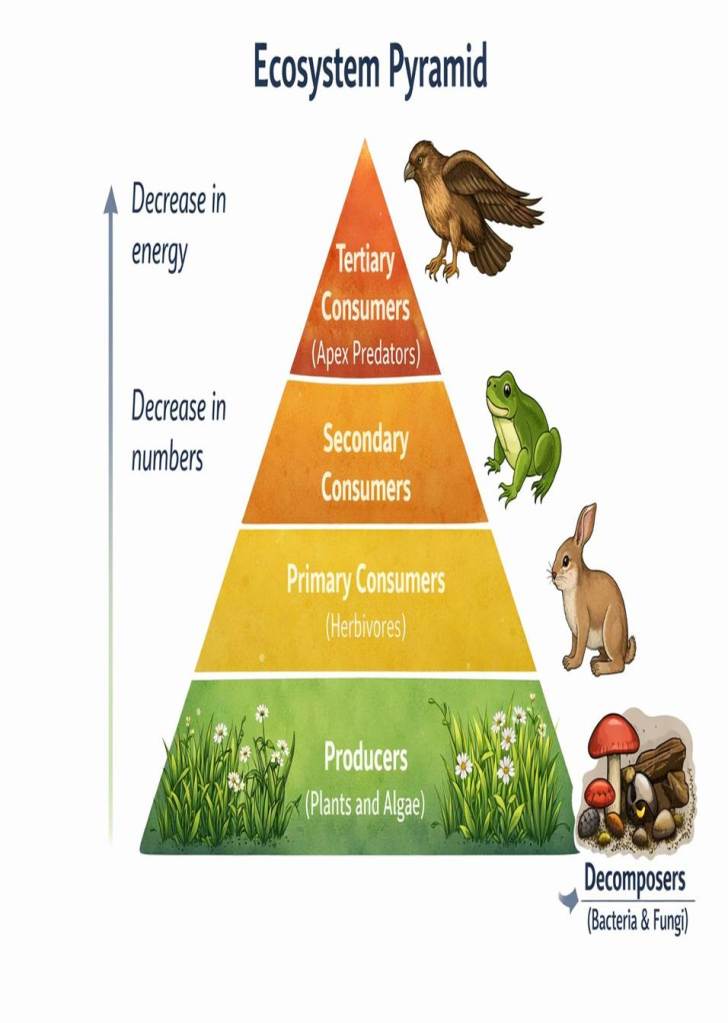
Based on how organisms get their food, they are divided into three groups:
1. Producers
- Green plants and some bacteria
- They make their own food using sunlight, carbon dioxide, and water
- Process used: Photosynthesis
Example: grass, trees, algae
Sunlight
↓
Producers (Plants)
2. Consumers
- They cannot make their own food
- They depend on producers or other consumers
Types of Consumers
- Herbivores (plant eaters): cow, deer
- Carnivores (meat eaters): lion, tiger
- Omnivores (eat both plants and animals): humans, bear
- Parasites (live on others): lice, tapeworm
Producers → Consumers
3. Decomposers
- Microorganisms like bacteria and fungi
- They break down dead plants, animals, and waste materials
- Convert complex substances into simple inorganic substances
- These nutrients go back into the soil and are reused by plants
Example: bacteria, fungi
Dead Plants & Animals
↓
Decomposers
↓
Nutrients in Soil
↓
Plants
Importance of Decomposers
- Clean the environment
- Prevent accumulation of waste
- Help in recycling nutrients
- Maintain soil fertility
What would happen without decomposers?
Garbage and dead organisms would pile up, and nutrients would not return to the soil. Life on Earth would become impossible.
Complete Ecosystem Flow Diagram
Sun
↓
Producers (Plants)
↓
Consumers (Animals & Humans)
↓
Decomposers (Bacteria & Fungi)
↓
Nutrients in Soil
↓
Producers
 The Bio Brief
Leave a comment