Food preservation means preventing food from spoiling.
Food spoils mainly because of the growth of microorganisms.
Signs of Spoiled Food
- Bad smell
- Bad taste
- Change in colour
- Rotten appearance
Food + Microorganisms
↓
Spoilage
So, food preservation helps to protect food from microorganisms and keep it safe for a longer time.
Why Does Food Spoil?
- Microorganisms grow on food
- Moist and warm conditions help microbes grow faster
- Spoilage of food is a chemical change
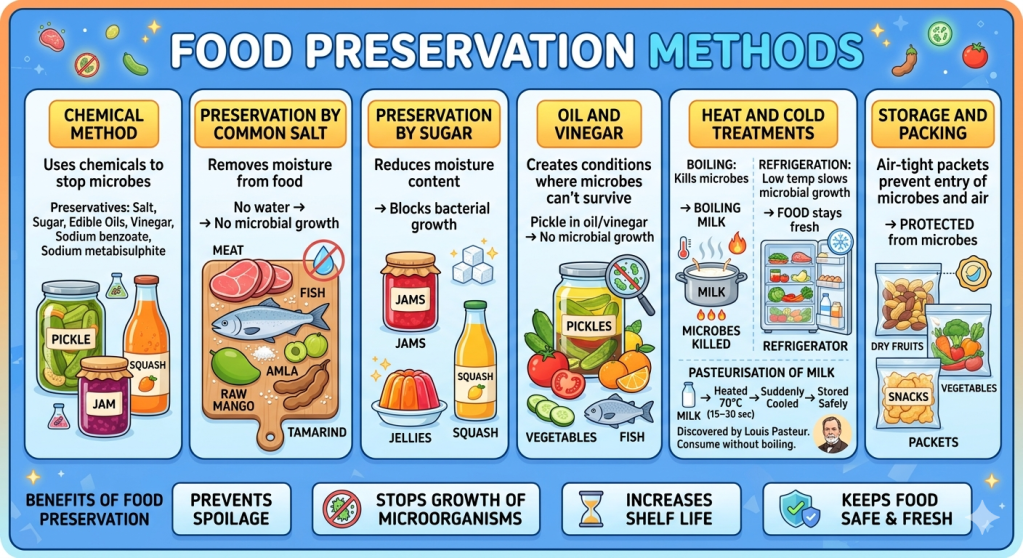
Methods of Food Preservation
1. Chemical Method (Preservatives)
Some chemicals stop the growth of microorganisms. These are called preservatives.
Common preservatives:
- Salt
- Sugar
- Edible oils
- Vinegar
- Sodium benzoate
- Sodium metabisulphite
Used in:
- Pickles
- Jams
- Squashes
2. Preservation by Common Salt
- Salt removes moisture from food
- Microorganisms cannot grow without water
Food + Salt
↓
Less moisture
↓
No growth of microbes
Used to preserve:
- Meat
- Fish
- Amla
- Raw mango
- Tamarind
3. Preservation by Sugar
- Sugar reduces moisture content
- Prevents growth of bacteria
Food + Sugar
↓
Reduced moisture
↓
Food preserved
Examples:
- Jams
- Jellies
- Squashes
4. Preservation by Oil and Vinegar
- Oil and vinegar create conditions where microbes cannot survive
Pickle + Oil/Vinegar
↓
Microbes cannot grow
Used for:
- Pickles
- Vegetables
- Fruits
- Fish
- Meat
5. Heat and Cold Treatments
Boiling (Heat Treatment)
- Boiling kills microorganisms
- Example: boiling milk
Milk + Heat
↓
Microbes killed
Refrigeration (Cold Treatment)
- Low temperature slows down microbial growth
- Food stays fresh for a longer time
Food in refrigerator
↓
Slow growth of microbes
Pasteurisation of Milk
Pasteurisation is a special heat treatment of milk.
Steps of Pasteurisation:
Milk
↓
Heated to 70°C (15–30 seconds)
↓
Suddenly cooled
↓
Stored safely
- Discovered by Louis Pasteur
- Pasteurised milk does not spoil quickly
- Can be consumed without boiling
6. Storage and Packing
- Food is stored in air-tight packets
- Prevents entry of microorganisms and air
Food sealed in packets
↓
Protected from microbes
Examples:
- Dry fruits
- Vegetables
- Snacks
Food preservation:
- Prevents spoilage
- Stops growth of microorganisms
- Increases shelf life of food
- Keeps food safe and fresh
 The Bio Brief
Leave a comment