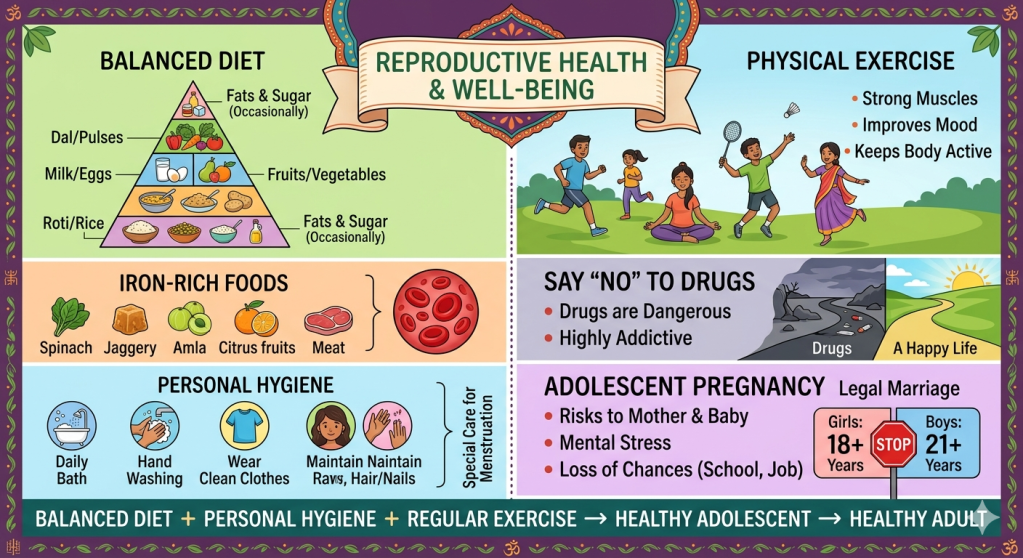
What is Reproductive Health?
Health means the physical and mental well-being of a person.
During adolescence, taking care of health is very important because the body is growing rapidly.
To stay healthy, adolescents need:
- Balanced diet
- Personal hygiene
- Regular exercise
- Correct knowledge (no myths)
Nutritional Needs of Adolescents
Adolescence is a period of rapid growth, so food must be nutritious and balanced.
What is a Balanced Diet?
A balanced diet contains:
- Proteins
- Carbohydrates
- Fats
- Vitamins
- Minerals
In proper proportions.
Example of balanced Indian meal:
- Roti/rice
- Dal (pulses)
- Vegetables
- Milk
- Fruits
Balanced Diet Components (Flow Chart)
Cereals → Energy
Pulses / milk / eggs → Proteins (growth)
Fats & sugar → Extra energy
Fruits & vegetables → Protection from diseases
Iron-rich foods → Healthy blood
Iron-Rich Foods (Very Important)
Iron helps in blood formation.
Good sources:
- Green leafy vegetables
- Jaggery
- Meat
- Citrus fruits
- Amla (Indian gooseberry)
Junk Food Warning
Chips, packed snacks, tinned food:
- Tasty but low nutrition
- Should NOT replace regular meals
Eat them only occasionally.
Personal Hygiene
Cleanliness is very important during adolescence.
Daily Hygiene Habits
- Bath at least once daily
- Wash all body parts properly
- Wear clean clothes
- Keep hair and nails clean
Teenagers sweat more, so hygiene is extra important.
Special Care During Menstruation
Girls should:
- Maintain proper cleanliness
- Change sanitary materials regularly
- Track menstrual cycle
- Be prepared for periods
Physical Exercise
Regular exercise keeps the body fit and strong.
Benefits of Exercise
- Improves fitness
- Keeps body active
- Builds strong muscles and bones
- Improves mood
Healthy Lifestyle Flow Chart
Balanced diet
+
Personal hygiene
+
Regular exercise
↓
Healthy adolescent
↓
Healthy adult
Myths, Taboos, Do’s and Don’ts
Adolescents often hear wrong beliefs.
Common Myths (All False)
- A girl becomes pregnant by looking at boys during menstruation.
- Mother decides the sex of the baby.
- Girls should not work in the kitchen during menstruation.
These are scientifically incorrect.
Always trust scientific facts, not rumours.
Say “NO” to Drugs
Adolescence brings many body and emotional changes. Some people may wrongly suggest drugs.
Never take drugs without doctor’s advice.
Why Drugs Are Dangerous
- Highly addictive
- Damage brain and body
- Destroy health and happiness
What is AIDS?
- Caused by HIV virus
- Weakens the immune system
How HIV Can Spread
- Sharing infected syringes
- From infected mother to baby
- Unprotected sexual contact
Avoid risky behaviour and never share needles.
Adolescent Pregnancy
Legal Age for Marriage (India)
- Girls: 18 years
- Boys: 21 years
Why Early Pregnancy is Risky
Teenage mothers are usually:
- Not physically ready
- Not mentally prepared
Problems of early motherhood
- Health risks to mother
- Health risks to baby
- Loss of education and job chances
- Mental stress
Therefore, early marriage and pregnancy should be avoided.
Quick Revision
Reproductive health = physical + mental well-being
Adolescents need balanced diet
Iron-rich food prevents anaemia
Maintain personal hygiene daily
Exercise regularly
Ignore myths and taboos
Say NO to drugs
HIV causes AIDS
Early pregnancy is harmful
Legal marriage age: girls 18, boys 21
In Simple Words
To stay healthy during adolescence, eat balanced food, maintain cleanliness, and exercise regularly. Do not believe myths or take drugs. Avoid early marriage and pregnancy because the body is not ready. Good habits during adolescence help build a healthy adult life.
 The Bio Brief
Leave a comment