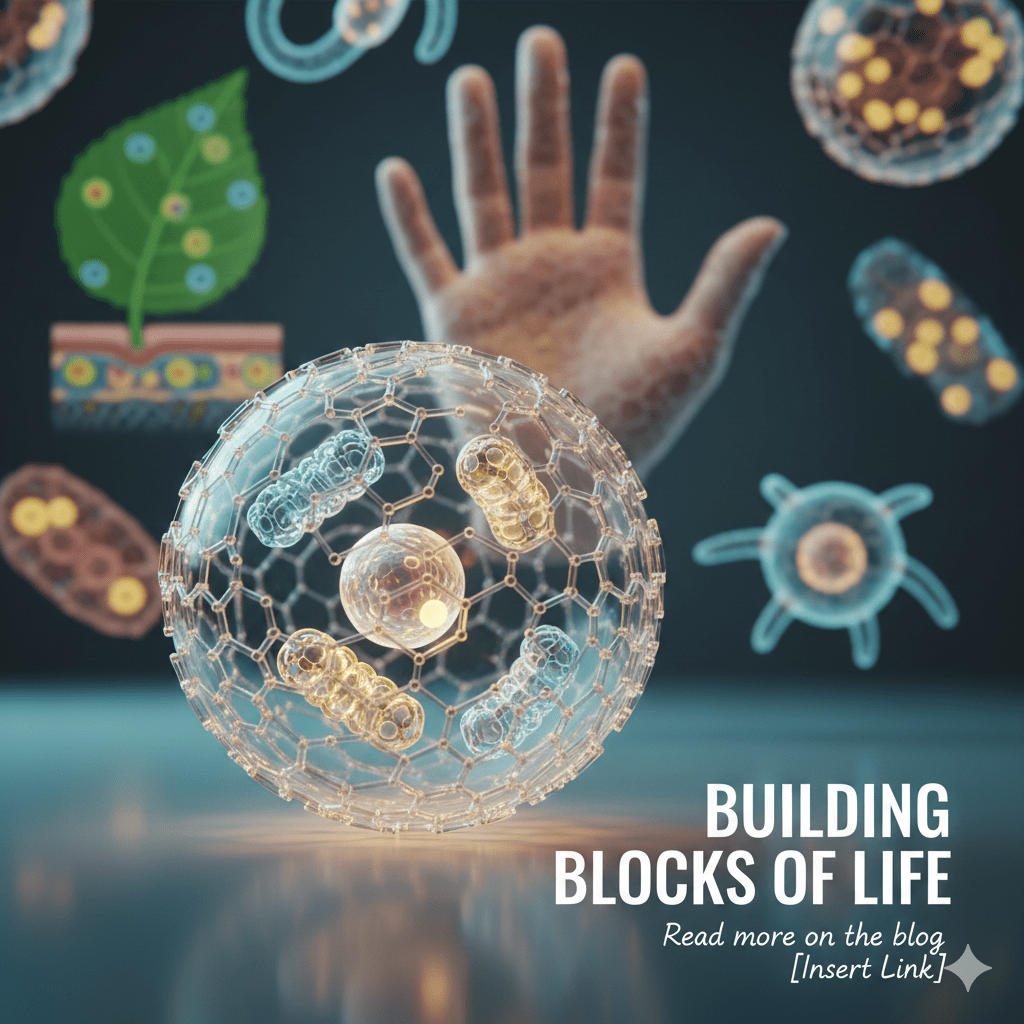
Introduction:
All living organisms—plants, animals, and humans—are made up of tiny units called cells. The cell is known as the fundamental (basic) unit of life because it is the smallest structure that can carry out all the life processes.
Cells are so small that most of them cannot be seen with the naked eye. They can only be observed using a microscope. Even though cells are tiny, they perform very important functions such as growth, respiration, nutrition, excretion, and reproduction.
Some organisms, like Amoeba, are made of only one cell and are called unicellular organisms. Other organisms, like humans, plants, and animals, are made of many cells and are called multicellular organisms. In multicellular organisms, different cells perform different functions, making the body work efficiently.
Thus, just like bricks are the building blocks of a house, cells are the building blocks of life.
 The Bio Brief
Leave a comment