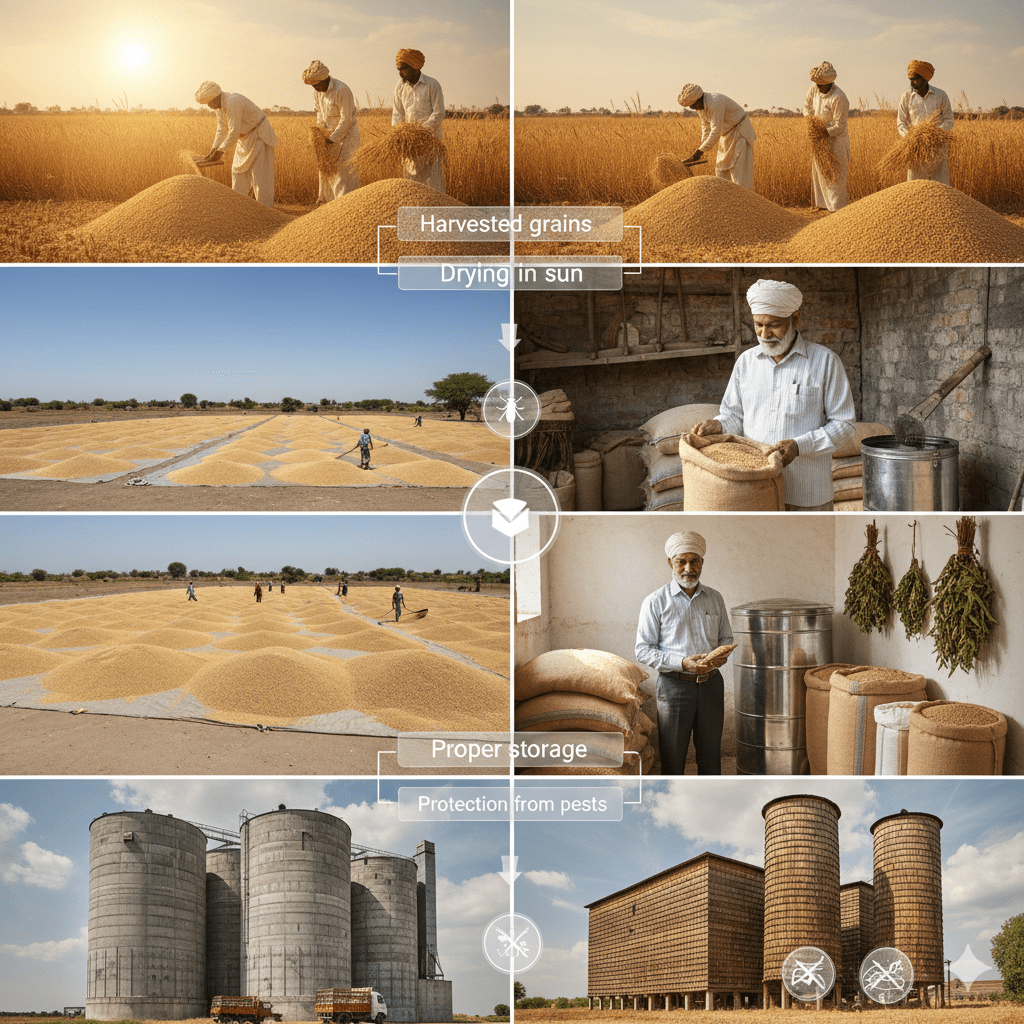
Storage is an important step after harvesting. Grains need to be stored properly so that they can be used later for food or seeds.
If grains are not stored correctly, they may be damaged by:
- Moisture
- Insects
- Rats
- Microorganisms (bacteria and fungi)
Why Drying is Necessary?
Freshly harvested grains contain more moisture. If they are stored without drying:
- Grains may rot or spoil
- They may be attacked by insects and microbes
- Seeds may lose their ability to germinate
Therefore, grains are dried in the sun before storage to reduce moisture.
Fresh grains
↓
Sun drying
↓
Less moisture
↓
Safe storage
Drying helps to:
- Prevent insect attack
- Stop growth of bacteria and fungi
- Increase storage life of grains
Methods of Storage
1. Small-Scale Storage (By Farmers)
- Grains stored in:
- Jute bags
- Metallic bins
- Dried neem leaves are added to grains at home
- Neem leaves repel insects naturally
Diagram idea:
Grains
↓
Jute bag / Metal bin
2. Large-Scale Storage
- Done in:
- Granaries
- Silos
- Used for storing large quantities of grains
- Protect grains from:
- Rats
- Insects
- Moisture
Diagram idea:
Silos / Granaries
↓
Large grain storage
Chemical Treatment
- In big godowns, grains are treated with special chemicals
- These chemicals:
- Kill pests
- Prevent microbial growth
- Must be used carefully to avoid health risks
Summary Table
| Step | Purpose |
| Drying | Reduce moisture |
| Storage | Protect grains |
| Neem leaves | Natural pest control |
| Silos/Granaries | Large-scale storage |
Summary Flow Chart
Harvested grains
↓
Drying in sun
↓
Proper storage
↓
Protection from pests
 The Bio Brief
Leave a comment