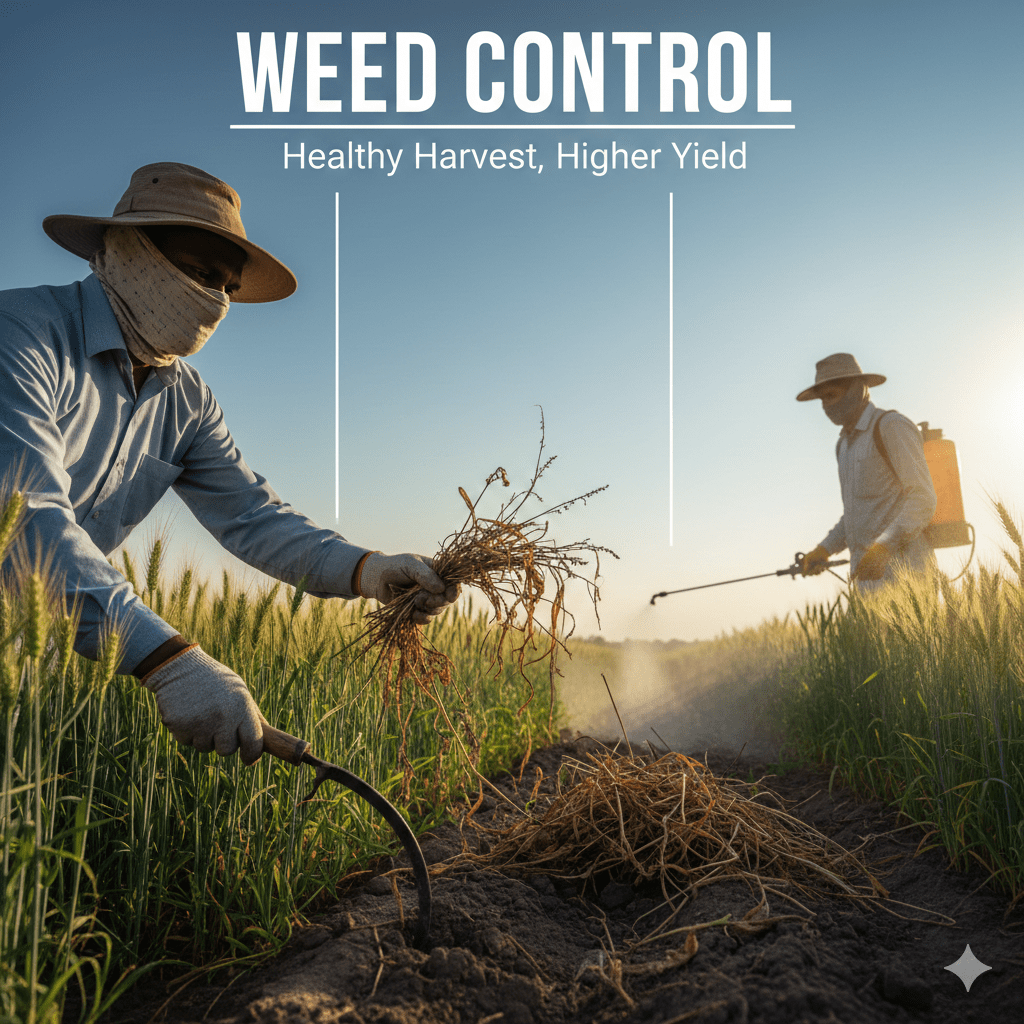
In crop fields, along with crop plants, some unwanted plants grow naturally.
These unwanted plants are weeds.
Example: Grass growing in a wheat field.
Weeding
The process of removing weeds from fields is called weeding.
Why is Weeding Necessary?
Weeds are harmful because they:
- Compete with crops for water
- Compete for nutrients
- Take up space and sunlight
- Reduce crop growth and yield
- Interfere with harvesting
- Some weeds may be poisonous to humans and animals
Weeds present
↓
Competition with crops
↓
Poor growth of crops
↓
Low yield
Methods of Weed Control
Farmers use different methods to remove and control weeds.
1. Tilling (Before Sowing)
- Done before sowing seeds
- Uproots and kills weeds
- Dead weeds dry and mix with soil
- Helps in early weed control
Tilling
↓
Weeds uprooted
↓
Dry up and mix with soil
2. Manual Weeding
- Weeds are pulled out or cut by hand
- Done using a tool called khurpi
- Weeding is done from time to time
Best time for weeding: Before weeds produce flowers and seeds
Khurpi
↓
Uprooting weeds
↓
Clean field
3. Chemical Method (Weedicides)
- Special chemicals used to kill weeds are called weedicides
- Example: 2,4-D
- Weedicides are:
- Mixed with water
- Sprayed using a sprayer
- They kill weeds without harming crops
- Sprayed during vegetative growth (before flowering)
Weedicides + Water
↓
Spraying
↓
Weeds destroyed
Safety While Using Weedicides
- Weedicides can be harmful to health
- Farmers should:
- Cover nose and mouth with cloth
- Handle chemicals carefully
- Avoid direct contact
Quick Comparison of Weed Control Methods
| Method | Tool Used | When Used |
| Tilling | Plough | Before sowing |
| Manual | Khurpi | During crop growth |
| Chemical | Sprayer | Early weed growth |
Summary
Weeds
↓
Compete with crops
↓
Weeding needed
↓
Healthy crop growth
 The Bio Brief
Leave a comment