In early times, till about 10,000 B.C.E., human beings were nomadic. They moved from one place to another in search of food and shelter. During this period, people ate raw fruits and vegetables and hunted animals for food.
Gradually, humans learned how to cultivate land and grow food crops such as rice and wheat. This marked the beginning of agriculture. Agriculture is the practice of growing plants and rearing animals to meet human needs.
When plants of the same kind are grown at one place on a large scale, it is called a crop. For example, a crop of wheat means that only wheat plants are grown in that field.
Crops are of different types such as cereals, vegetables, fruits, and pulses. They are classified mainly on the basis of the season in which they are grown.
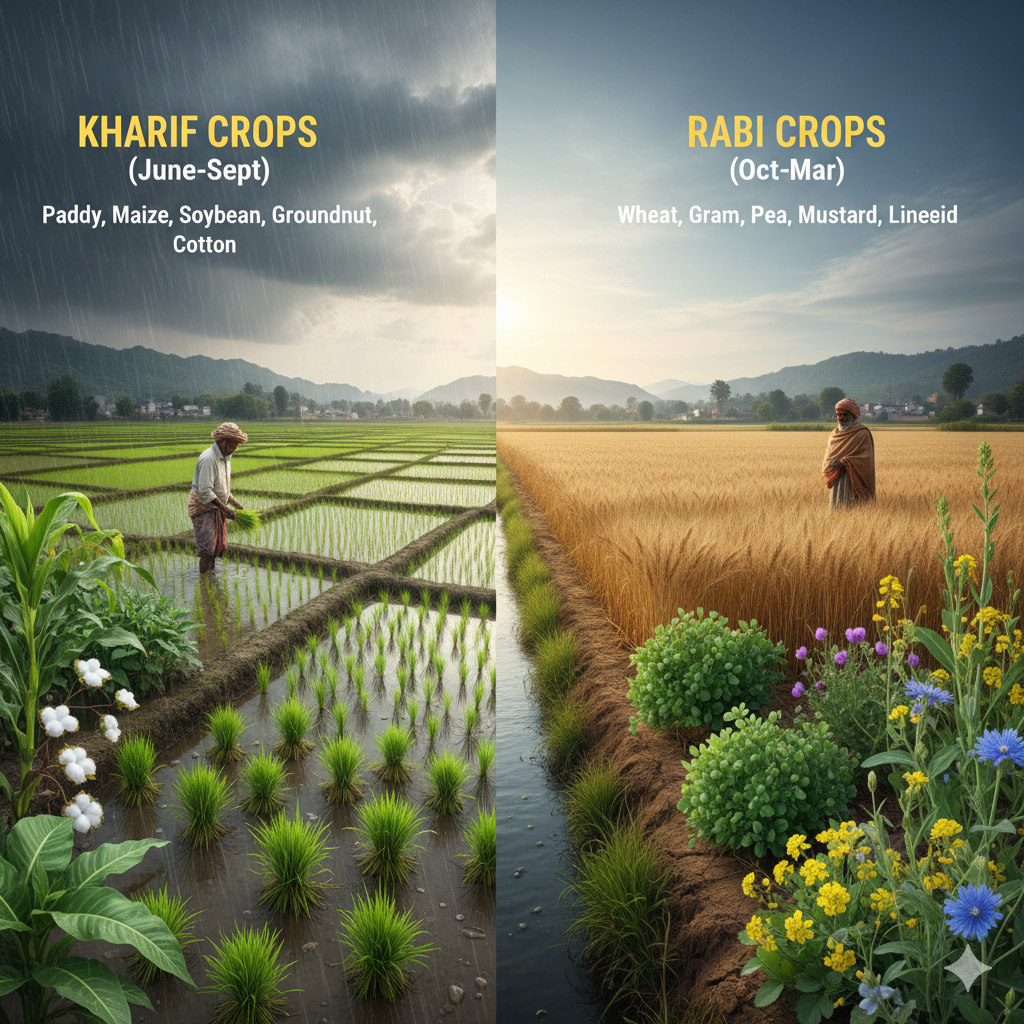
India is a vast country with different climatic conditions. Factors such as temperature, humidity, and rainfall vary from region to region. Due to this, a wide variety of crops are grown across the country. However, based on seasons, crops are broadly divided into two main types:
1. Kharif Crops
- Sown during the rainy season
- Rainy season in India: June to September
- Examples: Paddy, maize, soybean, groundnut, cotton
2. Rabi Crops
- Grown during the winter season
- Winter season: October to March
- Examples: Wheat, gram, pea, mustard, linseed
Apart from these, pulses and vegetables are also grown during the summer season in many parts of India.
 The Bio Brief
Leave a comment