Introduction:
Food is essential for all living organisms. We need food to obtain energy, grow properly, stay healthy, and perform our daily activities. Without food, life cannot exist. Every living organism, whether plants, animals, or humans, depends on food for survival.
Plants are the primary source of food on Earth. Green plants are autotrophic organisms, which means they can prepare their own food through the process of photosynthesis. All other living organisms, including humans and animals, depend directly or indirectly on plants for food. Even when we consume animal products such as milk, eggs, or meat, the animals themselves depend on plants for nourishment.
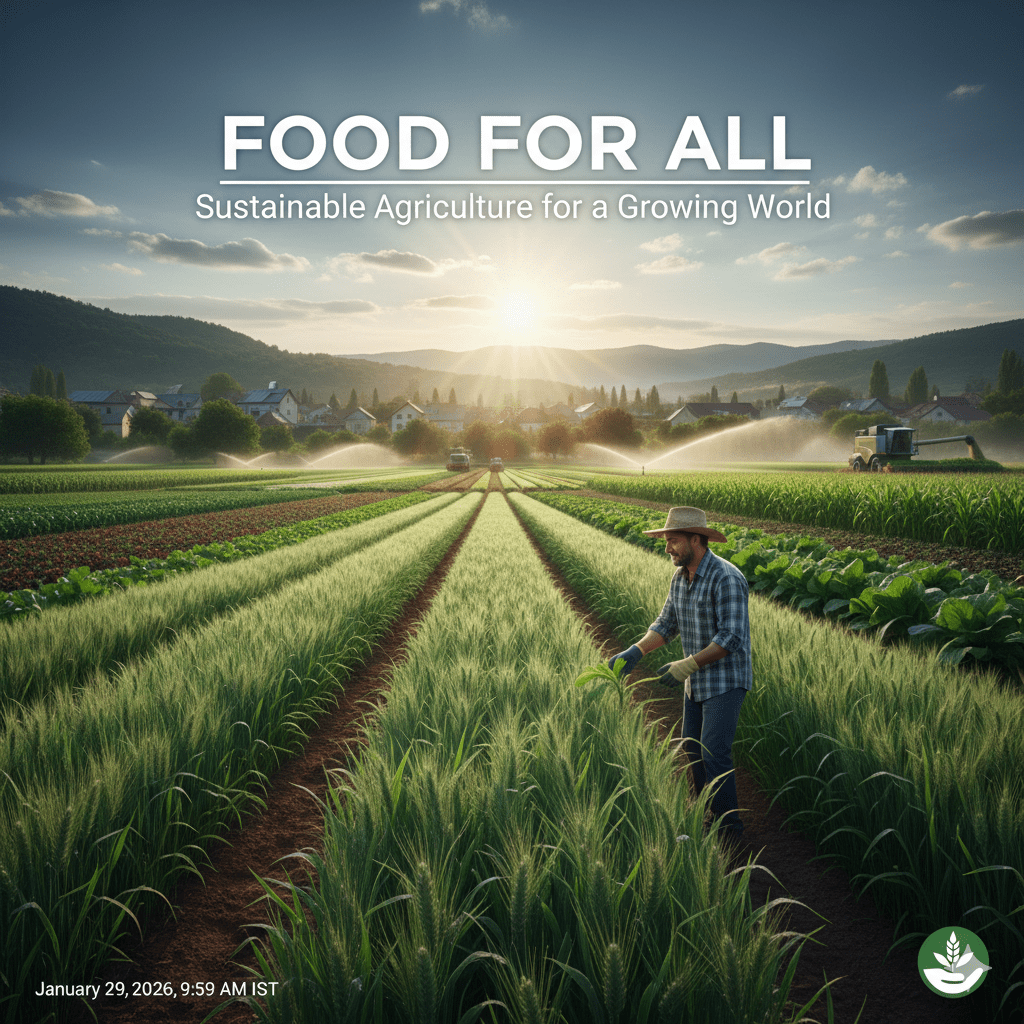
As the human population is continuously increasing, the demand for food is also increasing. To meet the daily food requirements of people, we grow plants on a large scale. These plants grown for food are called crops. Examples include wheat, rice, maize, pulses, fruits, and vegetables.
For sufficient food supply, crop production must be high and regular. However, producing crops alone is not enough. Proper management practices are required at every stage, such as preparation of soil, sowing, irrigation, use of fertilizers, protection from pests and diseases, harvesting, storage, and distribution. Good crop management ensures better yield, prevents losses, and maintains food quality.
Therefore, crop production and management play a vital role in ensuring food security. Efficient production, proper management, and fair distribution of crops help in meeting the food needs of the growing population and support the survival of all living organisms.
 The Bio Brief
Leave a comment