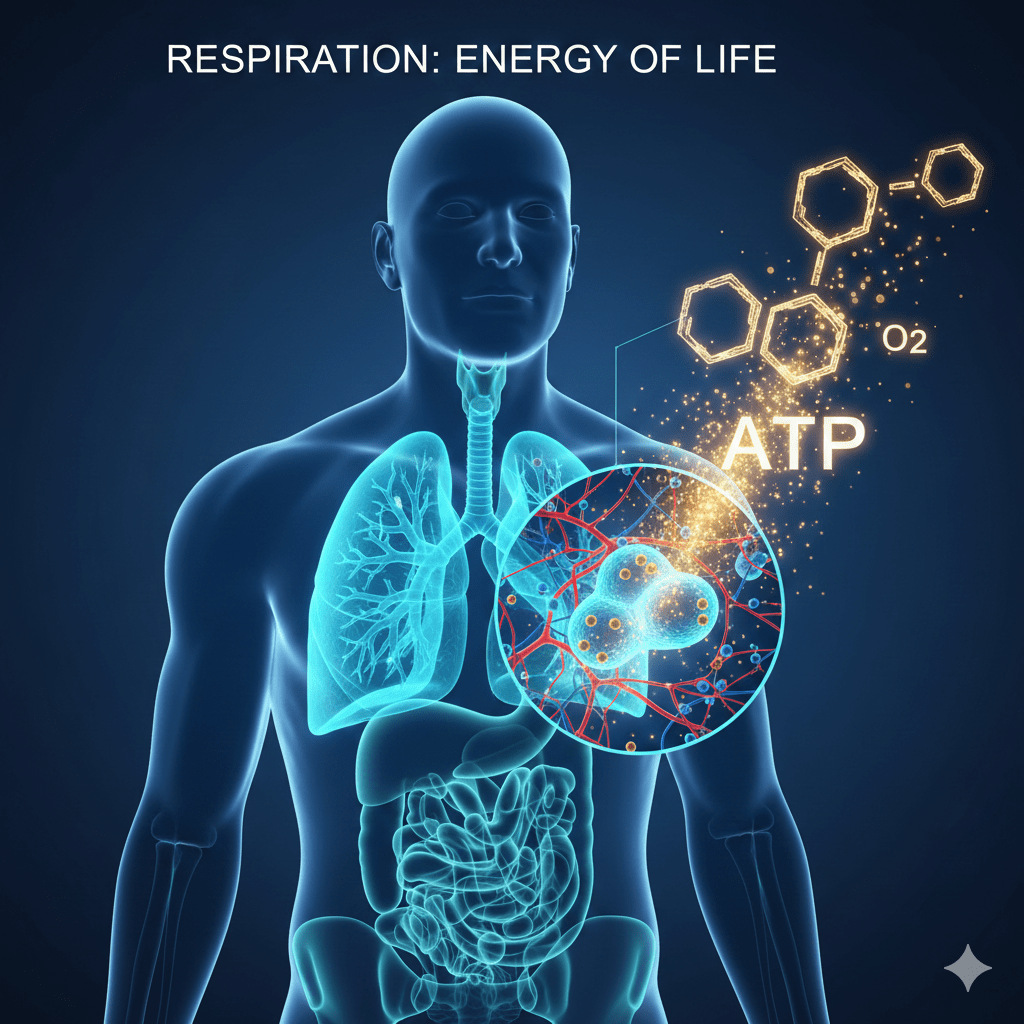
What is Respiration?
- Respiration is the process by which food (glucose) is broken down in cells to release energy needed for life activities.
Energy released is stored in the form of ATP
Why is Respiration Important?
- Provides energy for growth, movement, repair
- Needed for all life processes
- Occurs in every living cell
Types of Respiration
Flowchart: Types of Respiration
Respiration
↓
┌───────────────┬───────────────┐
Aerobic Anaerobic
(with O₂) (without O₂)
First Step of Respiration (Common to All)
Glycolysis
- Glucose (6-carbon) → Pyruvate (3-carbon)
- Occurs in cytoplasm
- Does not require oxygen
Glucose (6C)
↓
Pyruvate (3C)
Fate of Pyruvate
Pyruvate
↓
┌────────────┬─────────────┬─────────────┐
No oxygen No oxygen Oxygen present
(Yeast) (Muscles) (Mitochondria)
↓ ↓ ↓
Ethanol + Lactic CO₂ + H₂O
CO₂ Acid
(Low energy) (Cramps) (High energy)
(A) Anaerobic Respiration
- Takes place without oxygen
- Occurs in:
Yeast → Ethanol + CO₂
Muscle cells → Lactic acid
Lactic acid causes muscle cramps
(B) Aerobic Respiration
- Takes place with oxygen
- Occurs in mitochondria
- Produces:
Carbon dioxide
Water
Large amount of energy
Energy Currency – ATP
What is ATP?
- Adenosine Triphosphate
- Stores and supplies energy
ATP Cycle
ADP + Phosphate + Energy
↓
ATP
↓ (energy released)
ADP + Phosphate
Breaking one ATP releases 30.5 kJ/mol energy
Uses of ATP
- Muscle contraction
- Protein synthesis
- Nerve impulse conduction
- Cell division
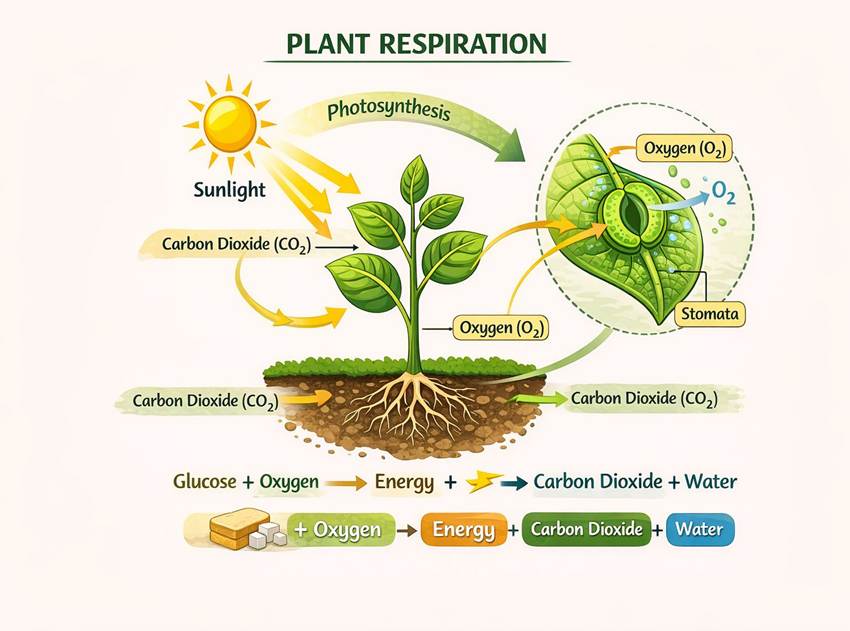
Exchange of Gases in Plants
- Takes place through stomata
- Occurs by diffusion
- Depends on: Day / Night
Requirement of plant
| Time | Main Gas Exchange |
| Day | Oxygen released |
| Night | Carbon dioxide released |
Respiration in Animals
- Aquatic Animals (Fish)
- Use dissolved oxygen
- Breathe faster
- Oxygen absorbed through gills
Terrestrial Animals
- Use atmospheric oxygen
- Special respiratory organs:
- Lungs (humans)
- Trachea (insects)
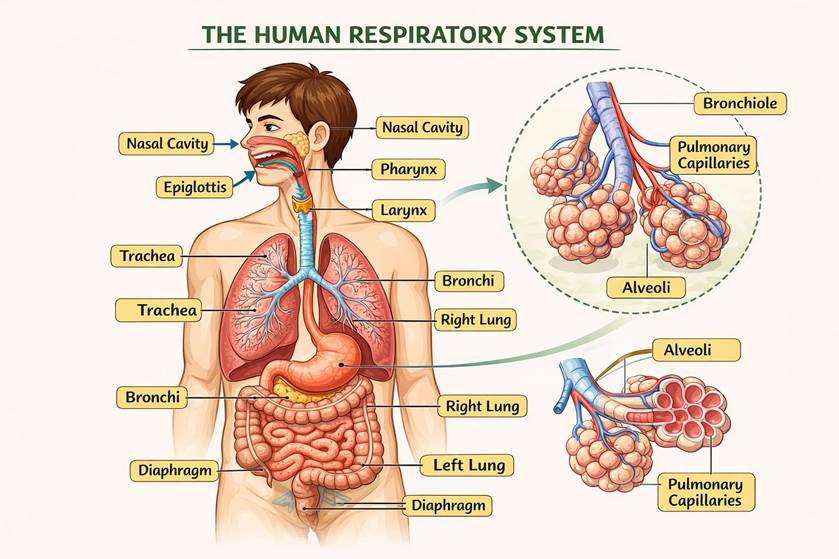
Human Respiratory System
Flowchart: Path of Air
Nostrils
↓
Nasal cavity
↓
Throat (Trachea)
↓
Bronchi
↓
Bronchioles
↓
Alveoli
Structure & Function
- Nostrils – filter air (hair + mucus)
- Trachea – cartilage rings prevent collapse
- Alveoli:
- Balloon-like sacs
- Very thin walls
- Rich blood supply
- Large surface area (~80 m²)
Breathing Mechanism
Inhalation
- Ribs move up
- Diaphragm flattens
- Chest cavity expands
- Air enters lungs
Exhalation
- Ribs move down
- Diaphragm relaxes
- Air goes out
Lungs always contain residual air for continuous gas exchange
Transport of Gases
- Oxygen Transport
- Carried by haemoglobin
- Present in RBCs
- Haemoglobin has high affinity for oxygen
- Carbon Dioxide Transport
- Mostly transported dissolved in blood
Importance of Large Surface Area
- Alveoli provide huge surface area
- Makes gas exchange fast & efficient
- Diffusion alone would take 3 years for oxygen to reach toes
Harmful Effects of Smoking
Smoking Damages:
- Lungs
- Heart
- Liver
- Tongue
Effects:
- Destroys cilia
- Dust and germs enter lungs
Causes:
- Cough
- Infection
- Lung cancer
- Say NO to tobacco! Stay healthy!
 The Bio Brief
Leave a comment